
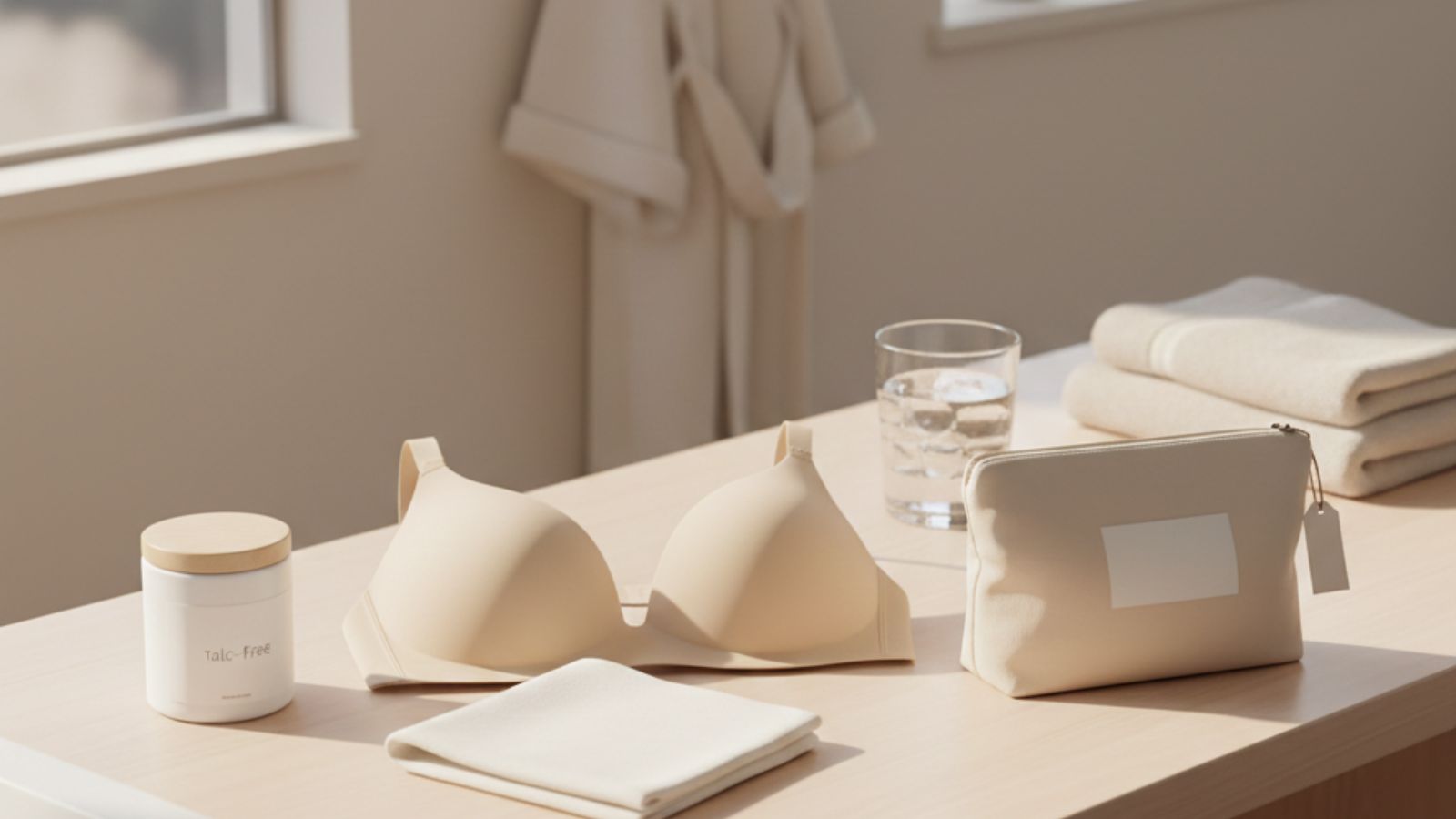

If you’ve ever lifted your bra at the end of a warm day and felt that damp, sticky patch underneath, you’re not alone. Underboob sweat is incredibly common. It can feel gross, smell weird, and sometimes lead to soreness or a rash.
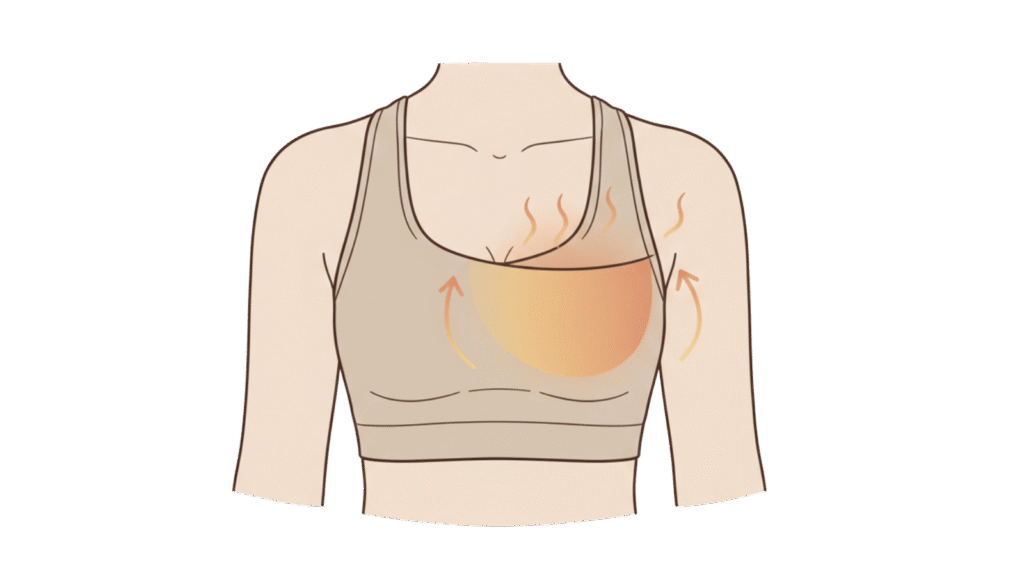
Here’s the helpful bit to know: your breasts do not “sweat” on their own. The sweat comes from the skin around them. It collects in the crease under your breast (the inframammary fold) because that spot is warm, covered, and doesn’t get much airflow.
This guide gives you simple, affordable ways to stay dry and comfortable. You can mix and match these until you find what works for you.
From moisture-wicking bra liners to aluminum-free powders and breathable fabrics, you’ll discover strategies that address the root causes of breast sweat without breaking the bank.
Quick Fix (60 seconds)
If you need relief right now, do this:
- Wipe the area with a clean tissue or body wipe.
- Pat it dry (do not rub if you already feel sore).
- Apply one option:
- A small amount of talc-free absorbent powder, or
- A thin layer of anti-chafe balm, or
- A soft bra liner tucked into the fold
- Put on a bra that feels supportive but not tight across the crease.
- If you can, change into a dry bra or top.
That’s it. You’re trying to reduce moisture and friction. Those two things cause most of the misery.
Why Sweat Collects Under Your Breasts and Won’t Evaporate
When sweat pools under your breasts, it’s not just uncomfortable.
It creates a perfect storm of conditions that prevent that moisture from going anywhere.
Your breast tissue naturally traps heat against your torso, forming what scientists call microclimate conditions, basically, a warm, humid pocket where air can’t circulate.
This enclosed space becomes a breeding ground for moisture buildup.
The constant skin-to-skin contact means sweat can’t evaporate like it would on your arms or back.
Add in friction from movement and you’ve got continuous sweat production with nowhere to go.
Your skin microbiome (the helpful bacteria living on your skin) gets overwhelmed by trapped moisture, creating that distinctive smell.
Apocrine sweat glands under the breasts contribute to this moisture, working overtime to cool your skin in response to heat.
Larger breasts create deeper folds where this cycle intensifies.
The trapped moisture also softens your skin, which lowers resistance to damage and makes the area more vulnerable to irritation and chafing.
A few things make it worse:
- Heat and humidity: your body sweats more, and the fold stays damp longer.
- Skin rubbing on skin: movement creates friction, especially when you walk, run, or lean forward.
- Tight or padded bras: they can trap heat and hold sweat against your skin.
- Larger breasts: the fold is deeper, so air moves less and moisture stays longer.
- Hormones: some weeks you just run warmer and sweat more (more on that below).
When that area stays damp, your skin softens. Soft skin irritates faster. Bacteria and yeast also love warm, moist folds, which is why odor and rashes can show up.
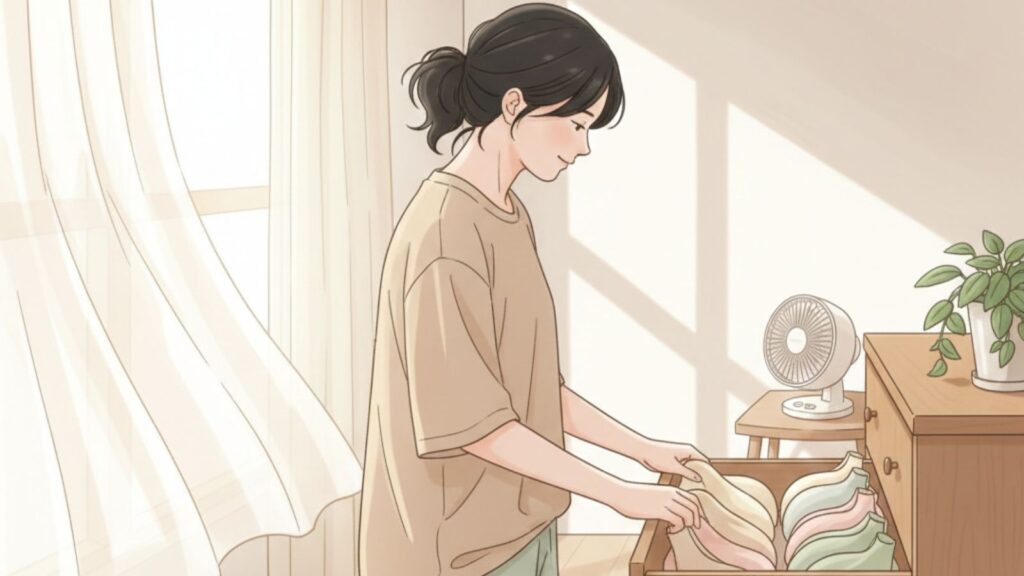
Choose Cotton and Moisture-Wicking Fabrics Over Synthetics
The research shows cotton actually worsens boob sweat by trapping moisture against your skin.
Here’s what actually works:
Why moisture-wicking synthetics beat cotton:
- They pull sweat away instantly through tiny channels in the fabric (capillary action, like how paper towels soak up spills), keeping your skin dry instead of damp and sticky.
- They dry eight times faster than cotton, meaning you’re not stuck in a cold, soggy bra all day while cotton slowly releases moisture.
- They reduce odor and irritation because bacteria can’t thrive without trapped wetness sitting against your skin for hours. Antimicrobial treatments in advanced fabrics can cut bacterial growth by over 99%.
Modern polyester and nylon blends offer better environmental impact than rewashing cotton multiple times.
Your aesthetic choices expand with technical fabrics now available in countless styles.
Start With the Right Bra and Fabrics
This matters more than most people think. The wrong bra can turn a mildly sweaty day into a chafing nightmare.
A bra that helps with underboob sweat should do two things
- Lift the breast slightly off the chest so the fold is not sealed shut
- Avoid digging into the crease where sweat and friction already build up
Here’s what usually works best:
- A firm band that stays put: it should feel snug, not painful.
- Smooth seams in the underbust area: rough stitching can rub all day.
- Breathable cups: spacer fabric and lighter, unpadded styles tend to feel cooler.
- Wireless can help: especially if wires press into the fold when you sit.
- Longline styles can help: the support spreads out, so pressure points calm down.
If your bra leaves deep red marks under your breasts, or the band rolls into the crease, it is likely contributing to sweat and irritation.
Fabrics that tend to feel better
There is no perfect answer for everyone, but here’s a practical way to choose.
- If you sweat a lot: moisture-wicking fabrics often feel drier because they move sweat away from the skin and dry faster.
- If you have sensitive skin: soft blends can feel gentler, as long as they do not stay wet on you.
- If you are at home or sleeping: a light bralette or a soft cloth barrier under the fold can be enough.
What usually causes problems:
- thick padding that holds heat
- stiff lace that rubs the fold
- bras that stay damp for hours after you sweat
If you are not sure, try this simple test: after a warm day, touch the inside of your bra at the underbust. If it feels wet and stays wet, that is the problem you need to solve.
Your Daily Prevention Routine (Morning)
This is the routine that helps most people the fastest.
- Wash gently. Use mild soap, lukewarm water, and your hands.
- Dry completely. Pat dry, then let the area air-dry for a minute if you can.
- Choose one main product:
- Powder if dampness is the main issue
- Anti-chafe balm if rubbing is the main issue
- Bra liner if you want a physical barrier between skin and fabric
- Put on a supportive bra that does not compress the fold.
If you try to stack everything at once, you can end up with clumping or irritation. Start simple, then adjust.
Powder That Actually Helps (And How To Use It)
Powder works best when it prevents moisture, not when it tries to rescue skin that is already wet.
How to apply it
- Apply to clean, dry skin.
- Pat it into the fold under each breast.
- Use a light layer. More is not better.
If you notice clumps later, that usually means you put it on when the skin was damp, or you used too much.
When to reapply
- Apply in the morning after showering.
- If you work out or spend time in heat, check once mid-day.
- If you need to reapply, wipe first, then pat dry, then apply.
If you prefer something less messy, anti-chafe balms can be easier. They do not keep you completely dry, but they can stop the raw rubbing feeling.
Use Deodorant or Antiperspirant on Your Underboob Area
Some people love this. Others get irritated fast. If you try it, go gently.
- Deodorant helps with odor by reducing bacteria.
- Antiperspirant reduces sweat by blocking sweat glands (usually with aluminum salts).
If your skin is sensitive, start with a gentle deodorant first. Fragrance-free is often safer for this area.
How to apply safely
- Use it on clean, dry skin.
- Let it dry before you put on your bra.
- Start with a small amount.
Patch test first
Put a small amount on a small patch of skin for a day. If you get stinging, redness, or bumps, skip it.
If you are already sore or rashy, deodorant and antiperspirant can make it worse. Focus on keeping the area clean, dry, and protected instead.
Choose the Right Formula
When it comes to managing underboob sweat, not all products work the same way, and understanding the difference between deodorants and antiperspirants helps you pick what’ll actually solve your problem.
Deodorants tackle odor by fighting bacteria, while antiperspirants use aluminum salts to block sweat glands entirely.
For sensitive underboob skin, you’ll want gentle formulas designed for skin-on-skin contact.
Look for products featuring:
- Magnesium hydroxide or mandelic acid that neutralize odor without blocking pores or irritating delicate skin
- Plant-based ingredients and prebiotics that soothe friction zones while maintaining your skin’s natural balance
- Aluminum-free, fragrance-free formulas with ingredient transparency and sustainable packaging that won’t cause rashes in moisture-prone areas
Skip regular underarm products. They’re too harsh for this spot.
Choose antiperspirants that handle sweat without clogging pores or causing irritation in this delicate area.
Apply Product Safely Daily
Once you’ve selected the right product, proper application makes all the difference between staying dry and wasting money on something that doesn’t work.
Apply to clean, dry skin before putting on your bra each morning.
Let the product dry completely, this takes about two minutes and prevents transfer to your clothes.
Reapply after workouts or showers to maintain protection throughout your day.
Look for products without harsh dyes or fragrances that won’t irritate the sensitive skin under your breasts.
Consistency matters more than quantity when building your routine.
Wash Daily With Mild Soap and Skip Harsh Scrubbing
Daily showering forms your first line of defense against boob sweat and the discomfort it brings.
You’ll want to use lukewarm water and an extremely mild, pH-neutral soap that won’t strip away your skin’s protective oils.
Think gentle baby soap or unscented body wash. These products maintain your microbiome protection (the good bacteria keeping your skin healthy) while preserving pH balance (the natural acidity that fights irritation).
Skip the harsh scrubbing entirely.
Your breasts don’t need aggressive cleaning, just a soft touch with your hands. After washing, pat dry with a clean towel instead of rubbing.
Let your skin air-dry completely before putting on your bra. This simple routine prevents moisture buildup without damaging the natural oils that keep your skin barrier strong.
Adjust Your Diet to Lower Your Internal Body Temperature
What you eat directly affects how much you sweat, and making smart food choices can lower your internal body temperature by several degrees.
Here’s what works:
- Choose water-rich produce: Cucumbers (95% water), zucchini, and citrus fruits hydrate while naturally cooling your body from the inside out.
- Switch to low-fat dairy: Calcium in yogurt and milk actually regulates your body’s temperature response and reduces sweating triggers.
- Add whole grains: Oats digest faster than white bread, meaning less internal heat production during digestion. Fiber-rich foods require less bodily work for digestion, which helps keep your body temperature lower.
Track How Your Menstrual Cycle Affects Sweat Production
Some weeks you feel fine. Other weeks, you feel like you are overheating for no reason. That is real.
After ovulation, progesterone rises and your baseline body temperature can nudge up. When your body runs warmer, you sweat more. The underbust fold notices first.
Hormonal Fluctuations During Cycles
Throughout each menstrual cycle, your body’s estrogen and progesterone levels rise and fall like a carefully choreographed dance, and these hormonal shifts directly control how much you sweat under your breasts.
Understanding your hormone timeline helps you anticipate when boob sweat will strike hardest.
Your cycle creates three distinct sweating patterns:
- Days 1-14 (Follicular phase): High estrogen keeps your hypothalamus (your brain’s thermostat) calm, reducing sweat production significantly
- Days 15-21 (Post-ovulation): Rising progesterone increases your core temperature by 0.5°F, triggering more frequent sweating
- Days 22-28 (Premenstrual): Peak progesterone plus dropping estrogen creates maximum sweat output, saltier and thicker than usual
How to use this to your advantage
- Track a few months and note your “sweaty days.”
- On those days, plan ahead: liner, breathable bra, lighter tops, and a quick reset kit.
You do not need to obsess over it. You just want a heads-up so it does not catch you out.
Adapting Your Management Strategy
Once you’ve identified your peak sweat days, the next step is adjusting your strategies to match each phase of your cycle.
During your luteal phase when core temperature rises, you’ll need stronger environmental controls like fans or air conditioning.
Schedule adjustments matter too.
Plan important meetings or presentations during your follicular phase when sweating stays more predictable.
Here’s how to adjust across your cycle:
- Days 1-14 (Follicular): Stick with your regular routine since sweat thresholds remain lower and more consistent.
- Days 15-28 (Luteal): Layer lighter clothing, carry extra absorbent pads, and increase environmental controls as your body temperature climbs 0.3°C to 0.7°C higher. The progesterone surge during this phase raises your baseline body temperature by approximately 0.5°F, making you more susceptible to sweating.
- Pre-menstruation: Prepare for hormone withdrawal effects with backup supplies and flexible scheduling options.
Workout Routine That Prevents the Post-Gym Rash
If boob sweat turns into irritation for you, workouts are usually the trigger. The fix is boring but effective.
Before you work out
- Start on dry skin.
- Use a liner, powder, or anti-chafe balm (choose one).
- Wear a supportive sports bra that lifts, not squashes.
After you work out
- Change out of damp clothing as soon as you can.
- Shower when possible, especially if the fold stays wet.
- Dry thoroughly under the breasts.
If you cannot shower right away, do a quick reset: wipe, pat dry, then add a fresh liner or light powder.
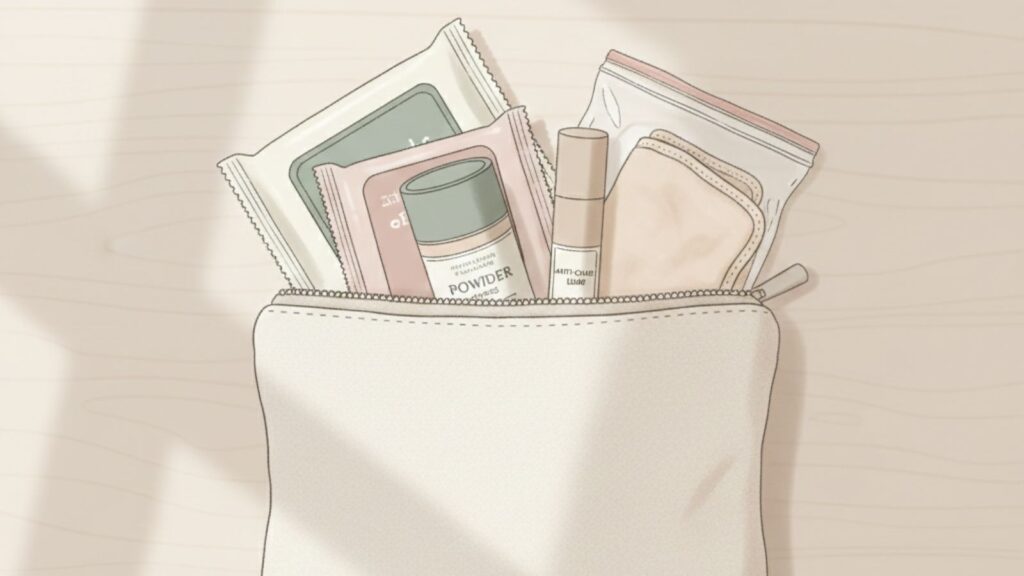
Midday Reset Kit (What to Keep in Your Bag)
If you deal with this often, keep a tiny kit. It saves you on hot days.
- body wipes or baby wipes
- a travel-size powder or balm
- a spare liner (or a folded clean cloth)
- a small zip bag for used items
Do not reapply powder onto wet skin. That turns into paste and can make irritation worse.
If You Have Odor, Chafing, or a Rash
This is where most people get stuck. The fix depends on what is actually happening.
If it is mostly odor
- Focus on drying the fold and reducing moisture.
- Wash bras regularly and let them dry fully.
- Consider a gentle deodorant, if your skin tolerates it.
If it is chafing or soreness
- Moisture plus friction is the usual combo.
- Use an anti-chafe balm or a liner.
- Avoid lace, rough seams, and anything that presses into the crease.
- Give your skin a break from tight bras when you can.
If you have a persistent red, itchy rash in the fold
This can be intertrigo, which is irritation in a skin fold that sometimes involves yeast or bacteria. You do not need to guess what it is. What you can do safely is keep the area clean, dry, and protected.
Helpful basics:
- gentle washing
- thorough drying
- a clean, dry barrier (liner or cloth)
- avoiding fragranced products on irritated skin
If it keeps coming back, or it is getting worse, a clinician can tell you if you need a specific treatment.
When to See a Clinician
Get checked if any of these are true:
- the rash lasts more than a week despite keeping it clean and dry
- the skin is cracked, bleeding, or very painful
- you see drainage, crusting, or spreading redness
- you get repeated flare-ups in the same spot
- you have diabetes or immune issues and the rash is persistent
- the sweating changes suddenly and dramatically for no clear reason
Frequently Asked QuestionsCan larger breasts cause more underboob sweat than smaller breasts?
Not more sweat glands, but often more trapped moisture. A deeper fold means less airflow and more skin-to-skin contact. That can make normal sweating feel constant.
Does shaving or trimming underboob hair reduce sweat and odor?
It will not reduce sweating. It might reduce odor for some people because sweat does not cling to hair as much. Shaving can also irritate the skin, so trimming is usually the safer option if you want to try anything.
Are there permanent treatments for severe sweating under the breasts?
If sweating is extreme and does not respond to basic steps, talk to a clinician. There are medical options for hyperhidrosis and related issues, but they are not the first step for most people.
Can medications or medical conditions increase breast area sweating?
Yes. Some medications and hormone changes can increase sweating. Thyroid issues, menopause symptoms, and certain antidepressants can also play a role. If sweating changes suddenly, it is worth discussing with your clinician.
Should you wear a bra to sleep to prevent nighttime underboob sweat?
You do not have to. If sweat wakes you up, a soft, wireless sleep bra or a light cloth barrier can help. If you sleep better without a bra, keep the area dry before bed and use a breathable top.a from Portland used to carry three shirts to work every summer until she combined a moisture-wicking bra with powder touchups. Now one change gets her through even outdoor client meetings.
Mix and match these strategies until you find your combination. Start with better fabric and a supportive bra, then add powder or antiperspirant as needed.
You’ll stay drier and more confident all day.
A simple way to make this easier
Pick one change to start:
- switch to a bra that lifts and breathes
- add a liner on hot days
- use powder or balm before you sweat
- keep a tiny reset kit for midday
You will know quickly what helps your body. Once you find your combo, underboob sweat becomes annoying, not a daily problem.