

You know that moment when you peel off your bra after a long day and wonder if you accidentally created your own personal sauna? Yeah… we’ve all been there, and honestly, it’s one of those universal experiences nobody warned us about.
Here’s the thing about boob sweat, it’s not just a comfort issue. When moisture gets trapped against your skin, you’re dealing with potential heat rash, bacterial growth, and the kind of chafing that makes you want to burn every underwire you own.
The secret weapon against underboob dampness comes down to three key factors. We’re talking moisture wicking fabrics like nylon and polyester blends, strategic mesh ventilation panels, and a snug band fit that actually lifts instead of smothers.
Best Sweat-Proof Bra Styles for Summer and Workouts
Let’s be real: nobody wants that sticky, trapped feeling when temperatures climb or you’re crushing a workout. The secret? Fabrics that actually work *with* your body.
Moisture-wicking synthetics like polyester blends or merino wool pull sweat right off your skin and spread it across the fabric’s surface.
It evaporates fast. You stay dry. Science is cool like that.
Racerback and sports bra styles tend to nail this technology. But here’s the game changer: mesh panel construction. Those strategically placed ventilation zones across your back and under the band create actual airflow. Goodbye, underboob sweat puddles.
Skip the heavy padding and underwires when it’s hot. Wire-free designs reduce skin-on-skin contact, which is exactly where moisture loves to hang out. Less contact means better ventilation.
For lower intensity days, consider these options:
- Breathable cotton bralettes for light activity and natural airflow
- Quick-dry synthetic blends for anything cardio
- Bra liners as backup during heavy sweating sessions
The bottom line? Prioritize construction that moves moisture outward, not materials that absorb and hold it against you. Proper lift creates an airflow gap between your breast tissue and ribcage, enabling the evaporative cooling that prevents sweat accumulation. Your summer self will thank you.
Why Boob Sweat Happens and How Bras Make It Worse
Your chest is basically a microclimate.
The inframammary fold, that crease under your breasts, is prime real estate for eccrine sweat glands.
These glands go wild when your core temp rises from exercise, heat, or hormones doing their thing.
Larger breasts create more skin-to-skin contact.
That’s physics working against you.
Heat gets trapped.
Moisture builds up.
It’s basically a personal steam room you never asked for.
Now let’s talk about what your bra’s doing wrong.
Most conventional bras use synthetic fabrics like polyester or nylon.
These materials form a seal against your skin that blocks airflow completely.
Here’s the problem breakdown:
- Padded cups act like insulation, holding heat against your body
- Underwires create pressure points that block natural ventilation
- Non-breathable fabrics prevent sweat from evaporating
Sweat needs somewhere to go.
When it can’t escape, it pools.
That’s when things get uncomfortable, and honestly, kind of gross.
The solution isn’t complicated.
Bras with moisture-wicking technology pull sweat away from your skin and let it evaporate.
Wire-free styles replace rigid wires with elastic bands to preserve circulation and airflow.
You stay dry.
Your skin stays happy.
No more swamp situation happening under your shirt.
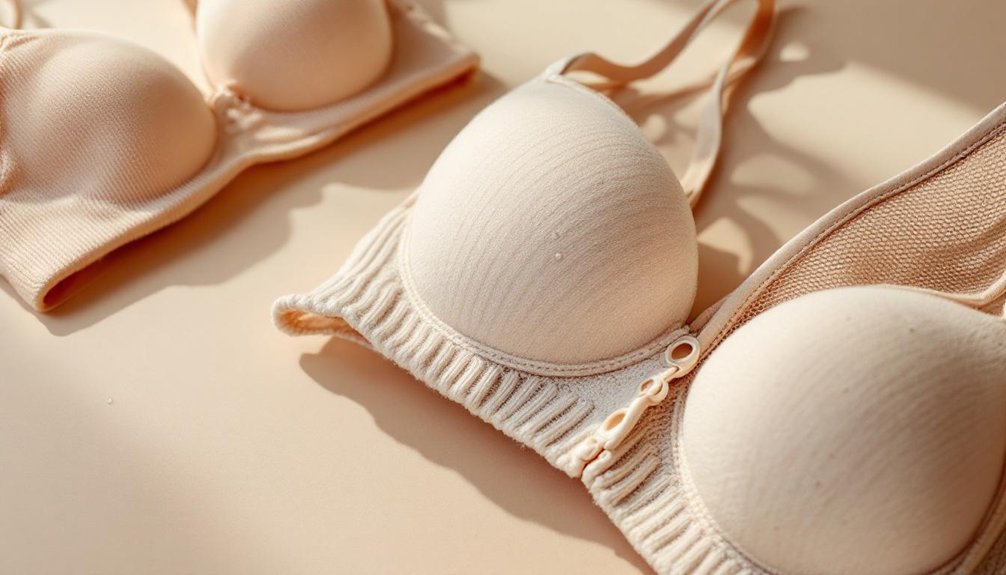
Cotton, Merino Wool, and Mesh: Fabrics That Wick Moisture
Sweat happens.
But how your bra handles it? That’s where fabric science gets interesting.
Organic cotton feels like a hug from nature.
It’s breathable and pulls moisture right off your skin.
The downside? It clings to that dampness like a grudge.
Great for lounging, less ideal when you’re actually moving.
Merino wool is the overachiever of the fiber world.
It wicks sweat away from your body AND fights odor naturally.
Some clever designs use ultra-thin merino linings inside synthetic cups.
You get dry comfort without the bulk.
Open-weave mesh panels are basically tiny airflow highways.
Placed across the back and underbust, they speed up evaporation way faster than solid fabrics can.
Recycled power-mesh versions do the same job while being kinder to the planet.
The smartest bras blend these materials strategically:
- Stretchy recycled nylon for shape and support
- Merino zones where sweat pools most
- Mesh panels where heat escapes fastest
You don’t have to choose between structure and breathability.
Modern fabric blends give you both.
Technical fabrics dry about eight times faster than cotton, making them essential when you need quick moisture management.
Moisture-Wicking Linings, Ventilation Panels, and Seamless Construction
Fabrics get all the glory, but placement and assembly? That’s where the magic happens.
Moisture-wicking linings sit right against your skin and do the heavy lifting.
Think ultra-thin merino wool or silk layers that grab sweat and shuttle it away from sensitive areas.
No pooling allowed.
Ventilation panels are your built-in AC system.
These recycled mesh zones along the sides or back let air flow across your chest.
More airflow means faster evaporation.
Then there’s seamless construction.
Those tiny ridges in regular bras? They’re sweat traps and friction factories.
Seamless designs eliminate both problems in one move.
Here’s what these features actually do for you:
- Wicking linings pull moisture outward before it builds up
- Mesh panels boost airflow where you need it most
- No seams means no chafing hotspots
Bras with zero absorbency ratings won’t hold liquid.
They redirect it. Everything dries fast, and you skip that sticky, clammy feeling entirely.
Your body’s cooling system works better when your bra works with it, not against it.
When trapped moisture sits in skin folds, it can lead to irritation, heat rash, or even fungal issues—so getting sweat away from the under-breast area fast is key. When moisture lingers in the fold, a stubborn red, itchy patch may be yeast, so learn how to spot and treat fungal rashes under the breasts.
How to Size and Fit Your Sweat-Wicking Bra
A poorly fitted bra turns into a sweat trap.
It bunches, rides up, and creates skin-on-skin contact exactly where moisture loves to pool.
Let’s fix that.
Start by measuring your underbust snugly and your full bust while standing.
Use a bra calculator to match your band size and cup to your actual breast shape, not just a generic number.
Your band does the heavy lifting here, not the straps.
It should fit firmly with just two fingers sliding underneath.
No gapping allowed.
- Try full-cup styles that lift breast tissue off your chest wall, this reduces trapped heat
- Look for adjustable straps and multi-row hook closures for fine-tuning
- Between sizes? Test both combos, the right fit won’t dig in or cause quad-boob
When your bra actually fits, you’ll notice less moisture buildup and way more support.
It’s honestly the difference between fighting your gear and forgetting it’s there.
Frequently Asked Questions
What Bra Material Is Best for Sweating?
Moisture-wicking fabrics like nylon, polyester, and bamboo are best for sweaty skin. These materials pull sweat away while drying quickly. Look for bras with mesh panels, antimicrobial treatments, and seamless microfiber construction to maximize airflow and prevent odor buildup during workouts or hot weather. Fabric is only part of the picture once you start logging miles, so these top solutions for runners’ boob sweat cover liners, powders, and post-run care too.
What Is the 3 Bra Rule?
The 3 Bra Rule means owning at least three bras to rotate daily, allowing elastic fibers 48 hours to recover between wears. This rotation extends each bra’s lifespan from six months to over a year while maintaining proper support and hygiene standards recommended by lingerie experts.
How to Handle Bra Sweat?
Use moisture-wicking bra liners, talc-free powders like cornstarch, and breathable fabrics to combat bra sweat effectively. Antiperspirant applied under the bust, cotton or bamboo bras, and daily washing prevent bacterial buildup and odor while keeping you dry throughout the day.
Why Do I Sweat Under My Breasts so Much?
Sweat glands concentrate heavily in skin folds, and your breast area traps heat while friction irritates sensitive tissue. Hormonal shifts, menopause, excess weight, hyperhidrosis, and certain medications can worsen sweating, increasing your risk for intertrigo—a common inflammatory skin condition in moist body areas. Hormonal changes in midlife can make this much worse, so it helps to know what excessive breast sweating during menopause looks like and when it is still normal.
Conclusion
Look, you’ve paid your dues. No more soggy underwires or that swampy feeling between the girls. That’s not some unavoidable curse of having a chest.
The right bra makes all the difference. You want moisture-wicking fabrics that pull sweat away from skin. Think polyester blends or technical nylon, not cotton. Cotton holds water like a sponge.
Mesh ventilation panels are your secret weapon here. They sit in high-heat zones and let air actually circulate. Your chest finally gets to breathe instead of stewing in its own humidity.
Then there’s fit. A proper band size matters more than you think. Too tight traps heat. Too loose lets everything shift and chafe. You want snug but not strangling.
Here’s what to look for:
- Spacer foam cups that promote airflow
- Flat seams to reduce friction
- Quick-dry lining in the gore and underband
- Perforated cup construction
August heat? Spin class? Hot yoga? You’ll handle it all without peeling yourself out of a damp mess afterward. Your chest deserves ventilation, not a personal steam room. Go forth and actually breathe.