


You know that moment when you’ve got a crucial presentation or a promising date lined up… and your chest decides it’s the perfect time to audition for a water park commercial? Yeah, your timing is impeccable, boob sweat.
Here’s the thing most people miss. It’s not just the temperature working against you, it’s the interplay between fabric breathability, moisture wicking fibers, and how your bra creates a microclimate in that underbust zone.
The real game changer starts with understanding which textiles actually pull sweat away from skin versus which ones just trap it there like a humid little greenhouse. Materials like moisture wicking polyester, bamboo viscose, and merino wool have become go to options for anyone serious about staying dry.
Swapping out even one or two key pieces in your rotation can transform how you feel all day. Let’s dig into the clothing choices that’ll keep you confident, dry, and totally unbothered.
Cotton and Organic Bras That Absorb Moisture Naturally
Synthetic activewear gets all the hype, but here’s the thing: cotton’s been handling sweat since before “moisture-wicking” was a marketing term.
The secret lies in cotton’s hollow fiber structure. Those tiny tubes actively pull perspiration away from your skin and let it evaporate. No plastic-y feeling. No trapped heat.
Organic versions take it up a notch by ditching the formaldehyde and harsh chemicals that make sensitive skin throw a fit.
If you’ve ever wondered why some bras leave you itchy and irritated, those processing additives are usually the culprits.
When shopping, look for these markers of quality:
- GOTS certification verifying chemical-free fiber processing
- No synthetic dyes or textile additives
- Pima cotton for fibers that are 50% stronger than standard varieties
Here’s a fun bonus: cotton naturally fights the funk. Its breathable weave prevents the bacteria buildup that turns synthetic bras into odor factories.
Your skin runs cooler too, since cotton dissipates body heat rather than trapping it against delicate tissue. Science and comfort, working together.
Better airflow means less trapped moisture in the fold under your breasts, where skin-on-skin rubbing causes the most damage.
Organic cotton also uses 91% less water than conventional cotton during farming, making it easier on the planet while keeping you dry.
Unlined and Mesh Bras for Sweat-Free Airflow
Ditching foam and padding isn’t just about minimalism.
It’s about letting your skin actually breathe.
Unlined bras create genuine airflow between fabric and skin, so your chest doesn’t turn into a personal sauna by noon.
Mesh construction takes ventilation to another level.
That open weave design maximizes air circulation while giving you style options from sleek basics to flirty semi-sheer looks.
Form meets function, finally.
Here’s what makes these styles work harder:
- Zero padding means zero heat trapping layers
- Thin fabric lets sweat evaporate instead of pooling
- Moisture wicking happens naturally without technical fabrics
- Lightweight materials dry fast after washing
Your body has a built in cooling system.
These bras actually let it do its job instead of fighting against it.
Perfect for summer days, tough workouts, or honestly just existing in a warm office.
Bonus: no bulky foam cups holding onto moisture for hours.
Your laundry routine just got easier too.
Unlike lined options that can feel warm or bulky, unlined styles keep you comfortable in heat without the extra fabric weight.
Wire-Free Bralettes for Breathable All-Day Comfort
Underwire leaving marks on your ribcage by noon? Yeah, we’ve all been there.
Modern wire-free bralettes have seriously leveled up from those paper-thin triangle styles that offered zero support.
Today’s designs use seamless construction to eliminate those annoying pressure points.
Wide underbands and reinforced side panels distribute weight across your torso instead of concentrating it in one spot.
Fuller busts get real structure without metal digging into skin.
The comfort features are where things get good:
- Moisture-wicking fabrics that pull sweat away from skin
- Strategic ventilation panels preventing heat buildup underneath
- Soft elastic bands that flex with your movements
These aren’t your grandmother’s “lounge only” bras.
You can wear them from your morning coffee through your evening commute.
No constant readjusting required.
Your desk job and your weekend errands get the same breathable support.
The snug band provides up to 80% of the lift you need, making underwire totally unnecessary for most daily activities.
Cooling Bras That Wick Sweat Away From Skin
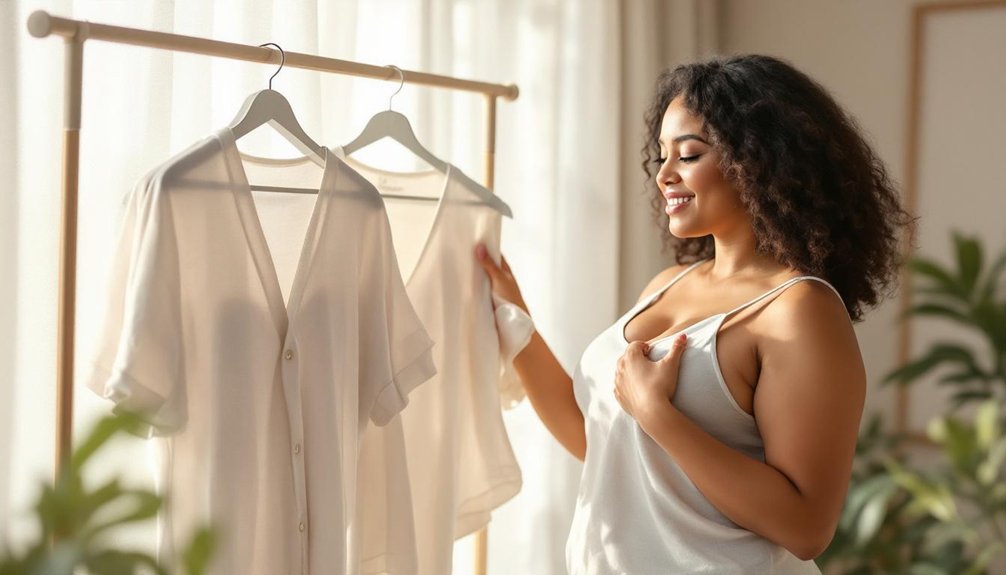
Your fabric choice matters more than you think.
Nylon-spandex blends (around 80/20) are the sweet spot. They pull moisture to the surface where it vanishes fast. Nike’s DRI-FIT technology does exactly this, and it’s not magic. It’s smart engineering.
Here’s where it gets cool (literally).
Phase change materials actually absorb your body heat. They store it instead of letting it turn you into a sweaty mess. Some newer bras even have sensors that respond to your temperature shifts in real time.
Mesh panels aren’t just for looks. They create airflow zones right where you’re generating the most heat. Strategic placement means targeted cooling.
The hidden perk? Many cooling bras come with antimicrobial treatments that stop odor-causing bacteria in their tracks. You’ll stay fresher longer, even between washes. Bodyfree technology uses a resilient application that keeps fighting bacteria wear after wear, so the protection doesn’t wash out after a few laundry cycles.
Key features to look for:
- Moisture-wicking nylon blends (80% nylon, 20% spandex)
- Phase change textiles for active heat absorption
- Ventilated mesh panel placement
- Built-in odor prevention technology
How Proper Lift Prevents Underbreast Sweat Buildup
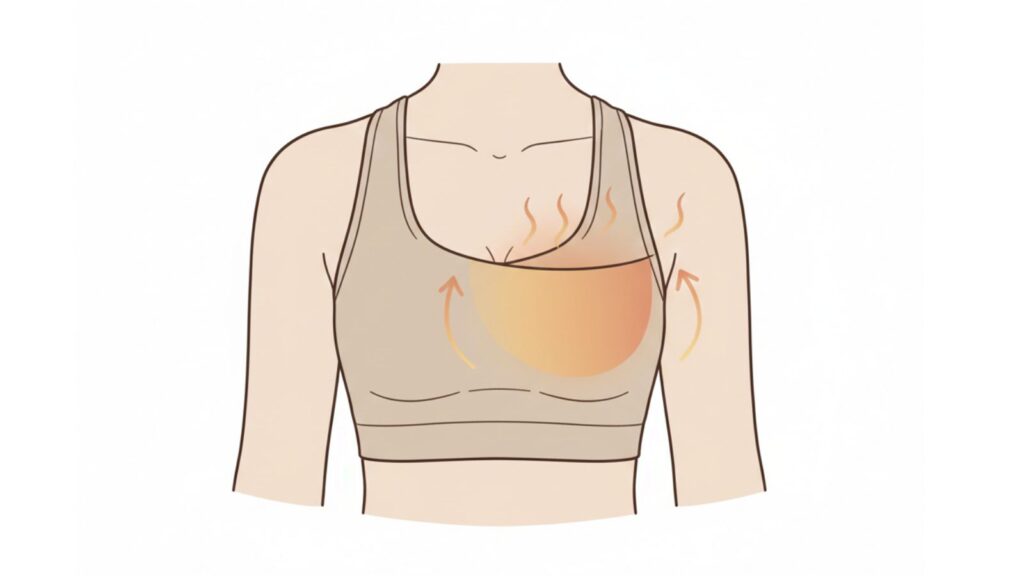
Okay, let’s talk about that uncomfortable truth nobody warned you about: breasts pressed flat against your ribcage create a perfect moisture trap. Sweat pools in that fold and just… sits there. Not cute.
Here’s where proper lift becomes your secret weapon. A well-structured bra with underwire support physically raises breast tissue away from your torso. This creates actual breathing room.
Air flows through those channels, and sweat evaporates instead of turning into that gross, sticky situation we all know too well.
The science is simple. Evaporative cooling needs airflow to work. No gap means no airflow. No airflow means sweat accumulates.
You feel the difference instantly when your skin isn’t plastered to itself.
There’s a bonus benefit too. Supportive lift cuts down on friction from skin rubbing against skin. Less friction means:
- Reduced irritation and chafing
- Fewer heat flares that trigger more sweating
- Way less of that compensatory moisture your body produces when it’s stressed
Think of structured cups as ventilation architecture for your chest. They’re literally designed to let your skin breathe.
Your body stops working overtime to cool down because you’ve solved the airflow problem at the source.
Sports Bras With Ventilation Zones for Active Days
Let’s be honest: nobody wants that swampy feeling mid-workout.
Ventilation zones are those mesh panels placed exactly where heat builds up most, typically under the bust and across the back.
They create actual airflow instead of just promising it on the tag.
The magic happens when you pair mesh with moisture-wicking fabric.
The mesh lets air in.
The wicking material grabs sweat and spreads it thin so it evaporates fast.
Double duty, one bra.
That racerback design isn’t just about looking sporty.
It shifts straps toward your center, opening up your shoulder blades and upper back.
More skin exposed means more cooling surface area.
Plus, your straps stay put when you’re jumping around like a maniac in cardio class.
A too-tight underband doesn’t just feel restrictive—it actually increases the work of breathing during exercise, forcing your body to burn extra oxygen just to maintain the same effort.
- Mesh panels positioned at high-sweat zones, not just decorative spots
- Fabric that feels dry to the touch even after effort
- Racerback cut for security and airflow combined
Your body generates serious heat during movement.
These bras actually work with that instead of fighting it.
Strategic Mesh Panel Placement
Your body runs hottest where breast tissue meets skin.
Movement cranks up the heat even more.
Heat mapping reveals these trouble zones cluster in predictable spots: between your shoulder blades, under your arms, and along your cleavage.
Smart manufacturers now use this thermal science to guide production, with effective designs available at wholesale minimums around 100 units.
Here’s where mesh panel placement actually earns its keep:
- Back panels between shoulder blades trap the most heat during cardio, so this zone needs maximum airflow
- Underarm sections prevent that lovely sweat pooling during HIIT and lateral movements
- Racerback configurations deliver both ventilation and posture support for longer sessions
The payoff? Proper placement cuts skin temperature spikes by wicking moisture before you even notice discomfort. Lightweight polyester mesh creates consistent cooling zones that actively disperse sweat away from compression fabrics. It’s thermal management that works with your body, not against it.
Moisture-Wicking Performance Fabrics
Polyester and nylon blends do the heavy lifting here.
Capillary action pulls sweat through engineered fiber channels, moving moisture from your skin to the fabric’s outer surface.
It’s basically a tiny highway system for perspiration.
The science gets cooler.
Hydrophobic fibers reject water at the skin layer while hydrophilic outer layers spread it thin for rapid evaporation.
Advanced microporous fabrics dry in 8 to 10 minutes.
Cotton? That’s a 45 minute soggy situation.
Speed matters more than you’d think.
Wet fabric against skin creates a bacterial playground.
That’s where odor and irritation start their party.
Antimicrobial finishes add another layer of protection between washes.
Silver ions or zinc pyrithione treatments target odor causing bacteria directly.
Quick care tips to protect your investment:
- Skip the high heat in the dryer
- Avoid fabric softeners that clog fiber channels
- Wash inside out to preserve surface treatments
Your body thermoregulates better when sweat actually leaves your skin.
No pooling means no clammy distraction.
You’ll push harder because you’re not fighting your own gear.
Seamless construction eliminates chafing points where traditional stitching would trap moisture and rub against skin during movement.
Racerback Design Benefits
Switching to a racerback changes everything about how your sports bra handles heat.
Airflow finally reaches your underband.
Traditional straps create fabric pockets that trap warmth.
Racerbacks eliminate those dead zones completely.
Your scapulae (shoulder blades) get full range of motion.
No straps crossing over them means nothing blocks your natural movement during rows, presses, or overhead work.
Your body mechanics stay clean.
Here’s the real win: weight distributes across your entire upper back instead of digging into two narrow pressure points.
Those pressure points? They’re sweat triggers.
Remove them and you remove a major source of moisture buildup.
The open design between your shoulder blades creates a natural heat chimney.
That’s prime real estate for thermoregulation.
Your body desperately wants to vent heat from that zone, and racerbacks finally let it happen.
The centralized strap placement also minimizes pressure on your shoulders and back, reducing the contact points where moisture typically accumulates.
Sweat-Absorbing Bra Liners for Extra Protection
These clever strips do the heavy lifting so your bra doesn’t have to.
They feature moisture-wicking layers that pull sweat away from skin and lock it inside the fabric. Think of them as a secret weapon tucked right where you need it most.
Finding your perfect match depends on how much you actually sweat.
Here’s the breakdown:
Thickness options:
- Ultra-thin single layer for light perspiration
- Three-layer construction for heavy sweating days
- Mid-weight for everyday protection
Material types:
- Cotton blends offer breathable comfort
- Synthetic fabrics deliver maximum moisture transport
- Bamboo charcoal provides natural antibacterial benefits
Attachment methods:
- Adhesive backs stick directly to skin
- Reversible inserts tuck into bra cups
- Some offer both options for flexibility
The real trick? Matching liner thickness to your daily routine.
Gym sessions call for that three-layer powerhouse.
Office days might only need a whisper-thin nude pad that vanishes under your shirt.
Your sweat level isn’t constant, so your liner game shouldn’t be either.
Look for liners that extend along the underboob crease for complete lower-breast coverage.
How Bra Liners Work
Think of these liners as your personal sweat defense squad.
They’re built with a clever three-layer moisture management system that actually works.
Here’s the breakdown:
- Inner cotton layer pulls sweat right off your skin through capillary action, moving it away from you
- Middle absorbent layer locks that moisture into the fiber structure so it can’t escape back out
- Outer waterproof barrier stops any wetness from hitting your bra or clothes
The whole thing stays put thanks to gentle adhesion mechanics.
No slipping.
No sliding around when you move.
What you’ll notice is how thin and soft these liners feel.
They mold to your natural shape without adding bulk.
And because they keep fabric from getting soggy, you skip that awful chafing situation.
Your skin stays dry.
Your bra stays dry.
They work seamlessly with any bra style, from everyday underwire to nursing and sports bras.
Everyone wins.
Choosing the Right Liner
Choosing the Right Liner
Here’s a trick that actually works.
Measure the distance between your arms right beneath your breasts. That number is roughly half your bra band size.
This simple measurement keeps you from dealing with annoying bunching or awkward gaps.
Look for these fit indicators:
- Band width between 2 to 4 inches suits most bodies
- Coverage area that extends toward your underarms, where breakthrough actually happens
Now let’s talk materials.
Cotton wins on durability. Bamboo wins on softness.
You’ll have to pick your priority.
Brands like More of Me to Love and Swoobie use three-layer absorbent systems that trap moisture inside instead of letting it migrate.
Your laundry routine protects your investment.
Machine wash on gentle, always in a garment bag.
Then air dry completely. Heat is the enemy here, so skip the dryer entirely.
It destroys absorbency faster than anything.
Bleach and fabric softener? Hard pass.
Both will wreck your moisture-wicking performance.
Many liners work even when you’re going braless, staying in place through the natural curve and weight of your breasts.
Frequently Asked Questions
Can I Use Antiperspirant Between My Breasts to Reduce Sweating?
Yes, you can safely apply antiperspirant between your breasts to control sweating. Look for aluminum chloride-based formulas or products labeled for body use. Apply to clean, dry skin to prevent irritation. Brands like Carpe and SweatBlock offer formulations designed for sensitive body areas.
How Often Should I Wash My Bras to Prevent Sweat Buildup?
Wash bras every two to three wears to prevent sweat buildup, or after each wear during heavy perspiration. Use cold water on the delicate cycle with mild detergent to preserve elastic fibers and spandex integrity. Air drying maintains shape and extends garment lifespan significantly.
Does Breast Size Affect How Much I Sweat Underneath Them?
Yes, breast size does affect underbreast sweating, though larger breasts don’t produce more sweat—they have fewer eccrine glands per square inch. The increased moisture comes from skin-to-skin contact creating occlusion, which traps heat and prevents evaporation in the inframammary fold.
Are There Any Foods That Help Reduce Excessive Underbreast Perspiration?
Yes, hydrating foods like watermelon, cucumber, and celery help regulate body temperature and reduce excessive sweating. Magnesium-rich options such as spinach and almonds support sweat gland function, while sage tea contains tannic acid that naturally minimizes perspiration when consumed regularly.
Should I Size up in Bras During Summer Heat?
No, you shouldn’t size up in summer. Heat causes temporary tissue swelling of approximately 2-3%, not enough to warrant a larger size. Instead, choose breathable fabrics like cotton or moisture-wicking materials and ensure your band fits snugly on the loosest hook for consistent support.
Conclusion
Up to 70% of women deal with underbreast sweat every single day. That’s a lot of us suffering in silence with the wrong bras.
You’ve now got seven solid strategies in your arsenal:
- Moisture-wicking fabrics that pull sweat away fast
- Strategic mesh ventilation panels for airflow
- Proper lift to reduce skin contact
- Smart liners for extra absorption
Here’s your move. Swap one dense cotton bra for a moisture-wicking option this week. Just one. Your skin will notice the difference immediately.
Cool, comfortable, and chafe-free all day long. That’s the goal, and now you know exactly how to get there.